Guide · 4 min read
How to plan a week of meals and build a shopping list from it
A meal plan is only worth making if the shopping list comes out of it. This is a weekly routine that takes about half an hour: plan the dinners first, fill in breakfast and lunch, list what each meal needs, and cross off what you already have.
Published by TrackerMaster
Start with the week, not the recipes
Before you choose a single meal, look at the calendar. Which nights are late? Who is out? Which evening has twenty minutes and which has an hour? A plan that ignores the week falls apart by Wednesday. Mark each dinner as quick, normal or long, and mark any night you will be out.
Then decide how many dinners you will actually cook. For most households it is five, not seven. The other nights are leftovers, something from the freezer, or eating out. Planning two leftover nights on purpose is what makes the rest of the plan hold.
Plan dinners first, then fill the gaps
- Pick the dinners for your cooking nights. Put the longest meal on the night with the most time.
- Cook double on one or two of them and schedule the leftovers for the next busy night.
- Repeat breakfasts. Two or three rotating breakfasts cover a week and keep the list short.
- Plan lunches as dinner leftovers where you can, and one simple default (sandwiches, salads) for the rest.
- Check for overlap: if two dinners use the same fresh herb or vegetable, put them in the same half of the week.
A worked example: one week of dinners
| Day | Dinner | Type |
|---|---|---|
| Mon | Chicken stir-fry with rice | Quick |
| Tue | Leftover stir-fry | Leftovers |
| Wed | Pasta with tomato sauce and salad | Quick |
| Thu | Tacos | Normal |
| Fri | Leftover tacos as burrito bowls | Leftovers |
| Sat | Sheet-pan sausages and roast vegetables | Normal |
| Sun | Roast chicken, potatoes, green beans | Long |
That is 21 meal slots for the week: 7 breakfasts, 7 lunches and 7 dinners. Here, two breakfasts rotate (oats and eggs on toast), four lunches are leftovers, and three are sandwiches. Every slot has an answer before you shop.
Turn the plan into a shopping list
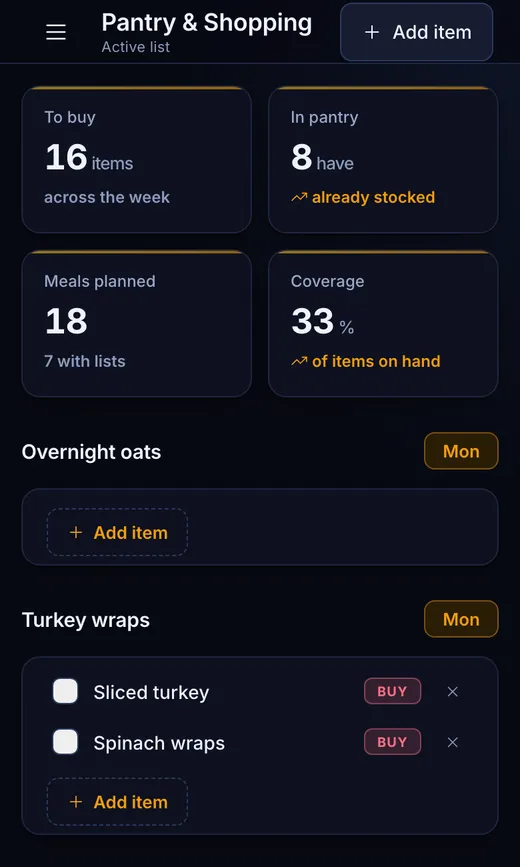
Go meal by meal and write down every item that meal needs, then mark each one Have or Buy. Doing it per meal, rather than from memory, is what stops the missing-ingredient trip on Thursday.
| Items listed | Already have | To buy | |
|---|---|---|---|
| Dinners (5 cooked) | 31 | 11 | 20 |
| Breakfasts | 6 | 3 | 3 |
| Lunches (sandwiches) | 5 | 2 | 3 |
| Total | 42 | 16 | 26 |
Leftover nights add nothing to the list, which is part of the point. Once an item is on the list, add the amount you need next to it, and combine duplicates: onions for the stir-fry and onions for the tacos become one line.
Shop from the list, not the shelves
A list built from the plan only saves money and time if you stick to it. Take it to the store, check items off as they go in the cart, and resist adding meals on impulse. If something is out of stock, swap within the same meal (another green vegetable, a different pasta shape) rather than buying for a meal you did not plan. Anything you forgot to list goes on the list right away, so next week’s version of that meal already includes it.
Order the list in the way you walk the store if that helps you, but keep the per-meal version too. When a dinner moves to another night, you can see at a glance which items belong to it.
When the plan breaks midweek
It will. Someone gets invited out, a late meeting eats the evening, or the tacos never happen. Do not throw the plan away; move the meal. Swap the skipped dinner with a leftover night, or push it to the next free evening. Fresh ingredients for a moved meal decide the order: cook the meal with the most perishable items first.
- Keep one backup dinner on hand that needs nothing fresh, such as pasta with a jar of sauce or eggs and toast.
- If two planned dinners are skipped in a week, plan one fewer cooking night next week.
- Freeze a portion of a doubled meal instead of forcing a third night of the same dinner.
Make next week faster
- Keep a short list of meals that worked. After three or four weeks you will plan from it in minutes.
- Reuse a good week whole. Copying last week and swapping two dinners is a full plan.
- Plan on the same day each week, ideally the day before you shop.
- After the week, note which meals got skipped. Those are the ones to replace.
Checklist
Weekly meal planning checklist
- Calendar checked: late nights, nights out, who is home
- Cooking nights chosen, with one or two leftover nights
- Dinners picked to fit each night’s time
- Breakfasts and lunches filled in
- Every item listed per meal
- Each item marked Have or Buy
- Duplicates combined and amounts written down
- List checked off in the store
Print this page to use the checklist on paper.